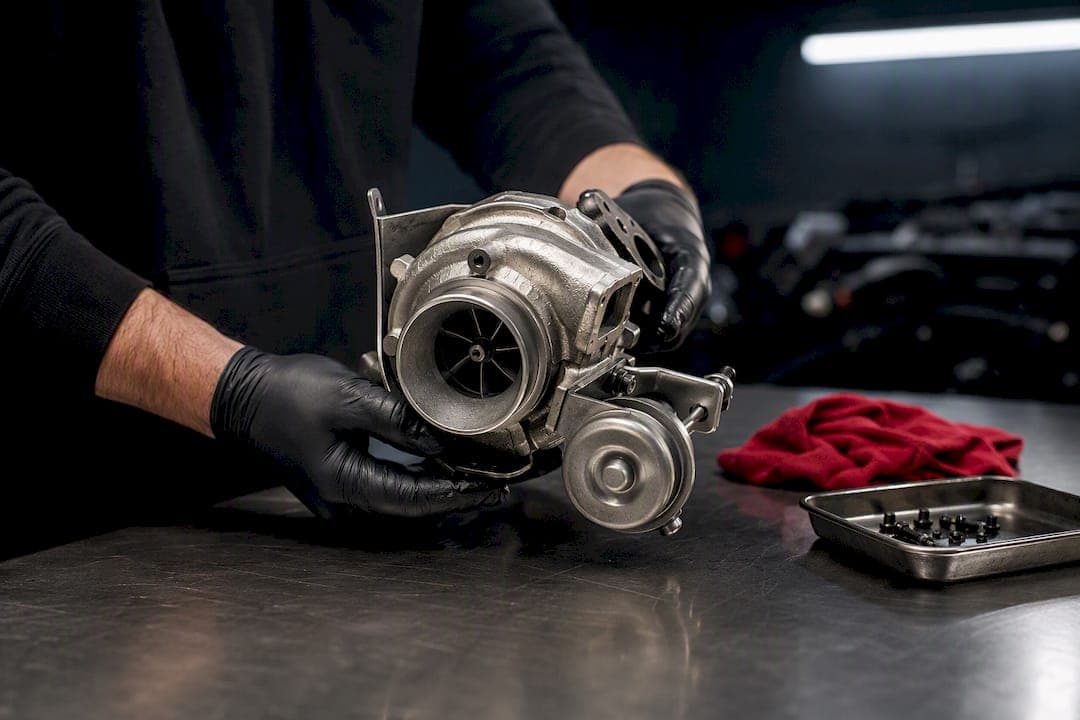
Expect to pay somewhere between £450 and £3,000+ for a UK turbo replacement, with most everyday drivers best served by an exchange or remanufactured unit rather than a brand new one. That figure swings hard depending on your car and where the fault lies. Twin-turbo setups and premium performance cars sit well above this range, so treat the headline number as a starting point, not a quote.
TL;DR:
- Repair costs for turbos typically range from £195 for basic fixes to over £3,500 for premium or twin-turbo setups, depending on vehicle segment.
- Remanufactured exchange units are usually the best balance of cost and reliability, with warranties of 12 to 24 months, compared to more expensive new units.
- Labour time varies from three to ten hours based on car type, with independent garages charging 30 to 40% less than main dealers.
- Diagnosing root causes such as oil system issues is crucial; fitting a turbo without addressing underlying faults can lead to rapid failure.
- An initial diagnostic, ideally including oil checks, is vital before replacing the turbo, and mobile call-outs offer convenient, upfront pricing.
Table of Contents
- How much does turbo replacement cost by vehicle type?
- Repair, exchange or new: what are you actually paying for?
- What determines labour cost and turnaround time?
- How do you choose the right repair route and garage?
- Why does correct diagnosis matter more than the turbo itself?
- What's the smartest way to approach a turbo bill?
- How Trackside Auto handles turbo diagnostics and repair
- Sources
How much does turbo replacement cost by vehicle type?
The number you'll actually pay depends far more on your car's segment than on which garage you choose. A basic hatchback turbo job and a twin-turbo performance rebuild are barely the same category of repair, and quotes reflect that.
At the cheapest end, minor rebuilds can start from a low cost covering basic repairs, covering things like reseals or bearing replacement on a unit that's still fundamentally sound. Exchange and remanufactured turbos typically start at moderate cost and increase depending on make and fitment complexity, usually landing at a middle cost range for fitted prices. New OEM or aftermarket units are usually the most expensive fitted option, and only really make sense in specific situations covered below. These figures come from UK pricing data compiled by Engines Market, which also breaks costs down by vehicle segment.
| Vehicle segment | Typical fitted price range | Typical labour hours |
|---|---|---|
| Small car (city cars, superminis) | £450–£1,500 | 3–5 hrs |
| Family car (hatchbacks, estates) | £800–£2,500 | 4–7 hrs |
| Premium / SUV | £1,500–£3,500+ | 6–10 hrs |
| Twin-turbo / performance vehicles generally cost more and take longer labour time, often significantly above typical ranges. |
These ranges reflect segment based pricing from Engines Market and hold reasonably steady whether you're in Cheshire or anywhere else in England, though labour rates shift the total, which we'll get to shortly.
A useful separate data point: turbo rebuild costs specifically (as opposed to full replacement) typically fall between £500 and £1,500, with parts making up the majority of that bill according to CostDetails' UK price guide. Independents generally undercut main dealers by 30 to 40% on the same job, which matters a lot once you're comparing quotes rather than just headline ranges.
Repair, exchange or new: what are you actually paying for?
Not all turbo quotes describe the same job, and understanding the difference stops you comparing apples with oranges.
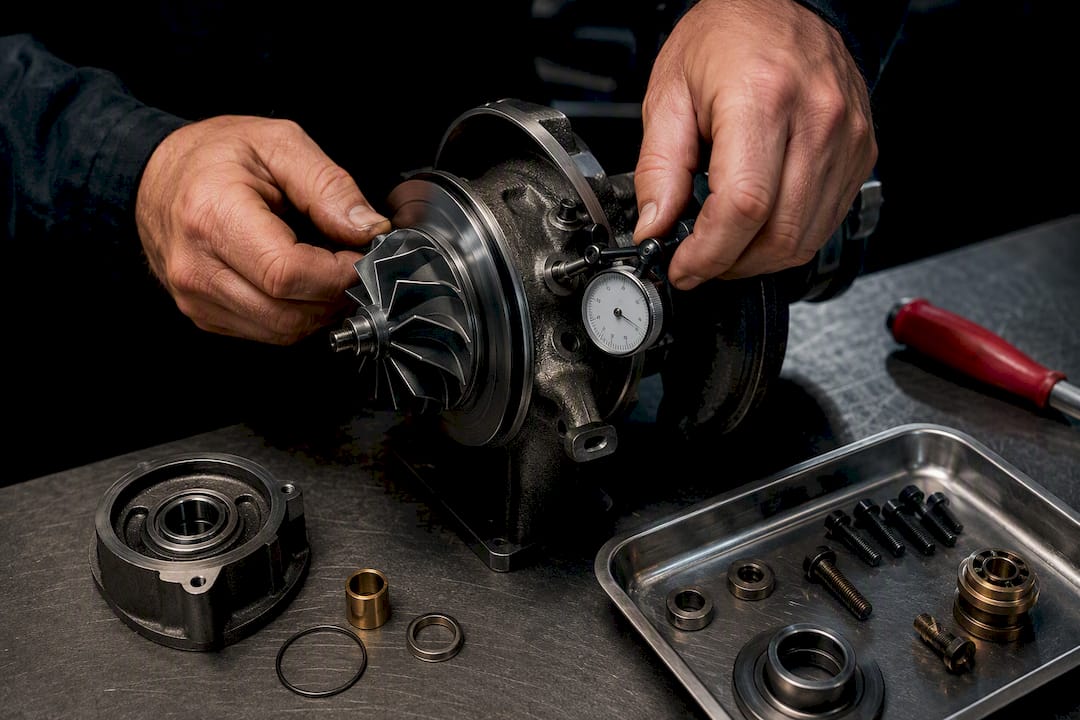
A repair or rebuild strips the turbo down to check the shaft, bearings, and seals for wear, then rebuilds and rebalances the unit before bench-testing it. This is viable when the core housing and compressor wheel are undamaged, and it's why prices can start from around £195 plus VAT for straightforward cases.
Exchange or remanufactured units work differently: your old, faulty turbo goes back as a "core" to offset the cost of a professionally rebuilt replacement, tested to OEM tolerances before it reaches your car. This route commonly comes with a 12 to 24 month warranty and is generally recommended as the best balance of cost and reliability for most drivers, over both cheap unbranded rebuilds and full new units.
New units matter mainly when:
- The car is high-value, under warranty, or being restored to original specification
- Internal damage has destroyed the housing beyond rebuild
- An insurance claim is covering the cost anyway
Watch for extras that inflate a quote beyond the turbo itself: an oil and filter flush (essential after any turbo failure), intercooler cleaning if debris has passed through, and actuator replacement on variable-geometry turbos. Budget an extra £50 to £150 for these where they apply.
What determines labour cost and turnaround time?
Labour hours scale with how buried the turbo is and how much else needs disturbing to reach it. Small cars typically need 3 to 5 hours; family cars 4 to 7 hours; premium and twin-turbo setups can run 6 to 20 hours depending on whether manifolds, intercoolers, or ancillary systems block access, per Engines Market's failure and repair data.
- Independent garages typically charge noticeably less than main dealers for identical work
- Mobile mechanics often undercut fixed workshop overheads further, with comparable parts quality
- London and the South East command higher hourly labour rates than the North and Midlands
- A straightforward job with parts in stock usually completes within a day; back ordered parts or hidden engine damage can stretch this to a week or more
Independent specialists and mobile mechanics typically save customers 30 to 40% on labour compared with main dealers when the job suits that route, without compromising on parts quality.
How do you choose the right repair route and garage?
Match the decision to your circumstances rather than defaulting to the cheapest number on a quote sheet.
- Check vehicle value and warranty status first. A car still under manufacturer warranty should go through an approved route; anything else, weigh repair cost against the car's overall value.
- Ask about the diagnostic fee upfront, and whether it's waived if you proceed with the repair.
- Ask what "core charge" means on your quote if you're getting an exchange unit, since this affects the final bill if your old turbo isn't returnable.
- Confirm warranty length in writing before booking. Anything under 12 months on a reman unit is worth questioning.
- Ask which brand of parts they're fitting and whether it's OEM, OEM equivalent, or unbranded.
Red flags worth walking away from: a quote given with no physical inspection, no warranty offered at all, vague descriptions like "reconditioned turbo" with no brand or spec attached, or pressure to add extras you haven't asked about. Specialist rebuilders themselves warn that advertised rebuilds under roughly £200 are often a red flag for corners cut on inspection and testing.
Pro Tip: Always ask whether the diagnostic includes an oil pressure and oil quality check, not just a turbo inspection. A turbo rarely fails in isolation, and skipping this step is how "fixed" cars end up back on the ramp within months.
For most everyday cars, a competent independent workshop or mobile specialist is the sensible route: same parts quality, lower overheads, and none of the main dealer premium.
Why does correct diagnosis matter more than the turbo itself?
Turbos rarely fail on their own. Blocked oil galleries, a struggling DPF, or ingested debris are common root causes, and fitting a new turbo without addressing them just buys you a second failure. Engines Market's failure data notes that a turbo shedding metal debris into the intake can escalate rapidly, turning a few hundred pounds of turbo work into a several thousand pound engine rebuild.
A failing turbo often damages other components; a competent provider will insist on an oil-system flush and basic engine inspection before fitting a replacement to avoid repeat failure.
This is exactly where Trackside Auto's approach earns its keep: a free call-out diagnostic that checks the oil system and surrounding components, not just the turbo, with transparent pricing and no pressure to add extras you don't need.
What's the smartest way to approach a turbo bill?
For most UK owners, the sensible move is a remanufactured exchange unit paired with a proper diagnostic, not the cheapest headline figure on a search results page. Warranty length and who actually inspected the car before quoting tell you more than the price alone ever will.
— David
How Trackside Auto handles turbo diagnostics and repair
If you're staring at a turbo warning light and dreading the garage trip, Trackside Auto removes that friction entirely: a free call-out brings the diagnostic straight to your driveway or workplace across Cheshire, with no charge just to find out what's wrong.

The diagnostic covers the oil system and surrounding components alongside the turbo itself, so you're not paying twice when a related fault surfaces a month later. Fitting can be arranged as a mobile repair at your home or workplace, or through a workshop appointment if the job needs it, and pricing is agreed upfront with no upselling once work is underway. If your car's on a performance build or you're planning a remap after the fit, Trackside's tuning team can pick that up in the same visit. Drivers in Crewe, Wilmslow, Sandbach, and the wider Cheshire area can book a diagnostic call-out directly, and it's worth having your car's recent service history to hand so the diagnosis can move quickly.
Sources
- Turbo Replacement Cost UK 2026 – Repair vs Exchange vs New | Engines Market
- Turbocharger replacement cost (Bumper blog)
- Turbo Repair, Remanufactured or Reconditioned Turbochargers | TurboRebuild